

Manufacturing ergonomics, retention, musculoskeletal risk
Why UK manufacturers are losing skilled workers to poor ergonomics
Most manufacturers do not lose good people overnight. They lose them gradually, through fatigue, recurring discomfort, restricted duties, short term absence and the quiet belief that another employer will make the job easier on the body.
Poor ergonomics rarely shows up as a single dramatic incident. It shows up as sore shoulders, lower back pain, wrists that never quite recover, operators swapping tasks to avoid pain, and supervisors constantly patching the day to keep output moving.
Technical summary for decision makers
- Musculoskeletal disorders are a major UK issue. HSE reporting for 2024/25 includes 511,000 workers suffering from a work related musculoskeletal disorder. :contentReference[oaicite:0]{index=0}
- Days lost are material. HSE reports 7.1 million working days lost due to work related musculoskeletal disorders in 2024/25, with an average 14.0 days per case. :contentReference[oaicite:1]{index=1}
- Ergonomics is a retention lever. If the job hurts, skilled people leave, especially when the labour market is tight and skills are hard to replace.
- The best fixes are mechanical. Workstation height, reach, tool positioning, lighting and part presentation often beat training based solutions.
- Start with a single station. A short, structured review can identify the biggest risk drivers in one shift.
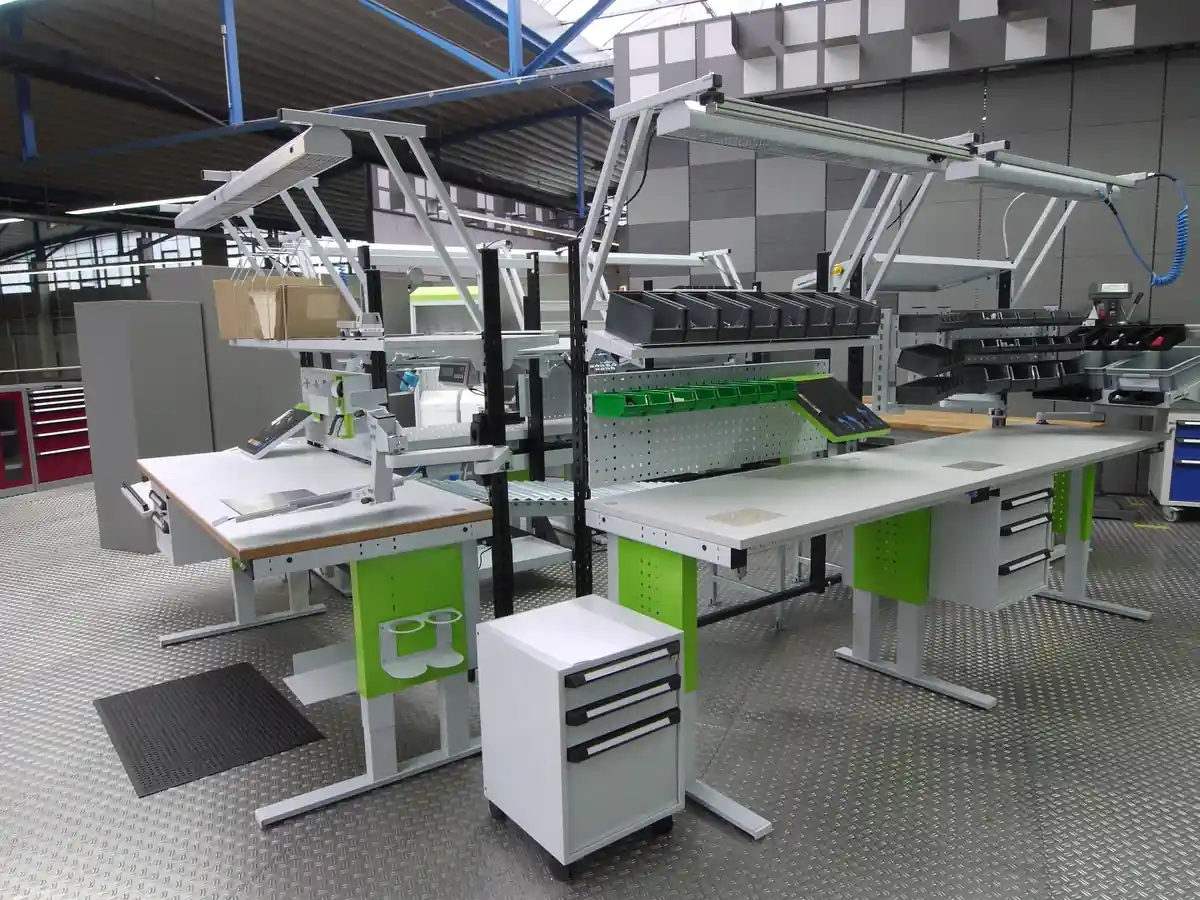
Small workstation choices, height, reach, lighting and tool placement, can compound into big differences in fatigue and consistency.
The real cost of poor ergonomics in a factory
Ergonomics is often described as comfort. In production settings, it is better understood as capacity protection. If a station causes fatigue and discomfort, you lose capacity in predictable ways.
- Short term absence and longer term restricted duties
- Higher error rates late in the shift when fatigue rises
- Lower pace and more micro pauses to recover
- More informal workarounds that bypass standard work
- Higher churn, which makes training load permanent
HSE data shows musculoskeletal disorders remain a major contributor to working days lost in Great Britain, which matters because the lost time is not evenly spread. It clusters around roles with repetitive tasks, awkward reaches, sustained force, and poor posture. :contentReference[oaicite:2]{index=2}
Why skilled workers leave, the ergonomics signals you can spot early
When a workstation is wrong, people do not always complain formally. They adapt. That is why the early signals look like operational noise.
- Operators bring their own cushions, mats, tape marks or makeshift risers
- People avoid certain tasks, or swap jobs informally during the shift
- Tooling migrates away from the station because the reach is awkward
- Quality checks find more defects near the end of the shift
- Supervisors struggle to rotate people because every station has a different posture demand
If you are seeing these patterns, the question is not whether people need to be tougher. The question is which physical constraints are forcing poor posture, excessive reach, pinch grip, high force, or repeated twisting.
A practical workstation ergonomics audit you can run in one shift
You do not need a long programme to make progress. You need a repeatable method that identifies the biggest drivers and fixes them in order.
1. Start with posture and height
Ask one simple question: does the station force raised shoulders, bent wrists, a rounded back, or sustained leaning? If the working height is wrong, everything else becomes a workaround.
- Can the work surface height be adjusted quickly for different operators
- Can the operator keep elbows near the body for most tasks
- Is the visual task supported with lighting rather than leaning
2. Reduce reach and twisting
Reach is the silent killer in repetitive work. If parts, tools, or fixtures are just out of the easy zone, the body pays for it thousands of times per week.
- Place the most used items closest, with the least used further away
- Bring parts to the operator, not the operator to the parts
- Eliminate repeated twisting with better part presentation and bin positioning
3. Fix force and grip problems
High force tasks and awkward grips create fatigue fast. If a task requires sustained force, look for mechanical aids before you look for training.
- Use tool balancers, counterbalance arms, and correct torque tools
- Improve fixturing so hands do not become clamps
- Reduce pinch grip by improving handles and part presentation
4. Improve lighting and visual comfort
Operators lean when they cannot see properly. If you fix lighting, you often fix posture without asking anyone to change behaviour.
- Add task lighting at the station, not general light only
- Control glare so people do not change posture to avoid reflections
- Make inspection points visible without sustained neck flexion
5. Make the improvements stick
Ergonomics improvements fail when the station drifts. You need a physical system that keeps tools and settings in place.
- Use defined locations for tools and consumables
- Lock in common height settings where possible
- Document the station set up in one page with photos
What to measure so it does not become opinion
If you want this to land with leadership, track a small set of measures that relate to retention and performance, not just comfort.
- Discomfort reports by station, weekly trend
- Restricted duty assignments linked to task type
- Short term absence in teams tied to high repetition work
- Quality escapes or rework spikes late in shift
- Time to competency for new starters at the station
Where to send people with a different problem
If your main issue is changeovers, line flexibility, and protecting capital spend through process changes, use our ROI guide on modular workstations.
Read the ROI guide to modular industrial workstations in the UK
Want an ergonomics first workstation plan?
If you share the task, shift pattern, operator range and any known discomfort issues, we can propose a workstation set up that reduces fatigue and supports retention, without turning the line into a bespoke one off.
Book an ergonomics reviewConclusion
Skilled manufacturing workers do not leave because they dislike the work. They leave because the work gradually becomes harder to sustain. When fatigue and discomfort become normal, output and quality suffer, and retention becomes a constant battle.
The fastest progress comes from mechanical fixes that remove poor posture, excessive reach, awkward force and poor lighting. Start with one station, measure what changes, then standardise what works.